Threats to estuarine fish assemblages
Overview
Why is this project important?
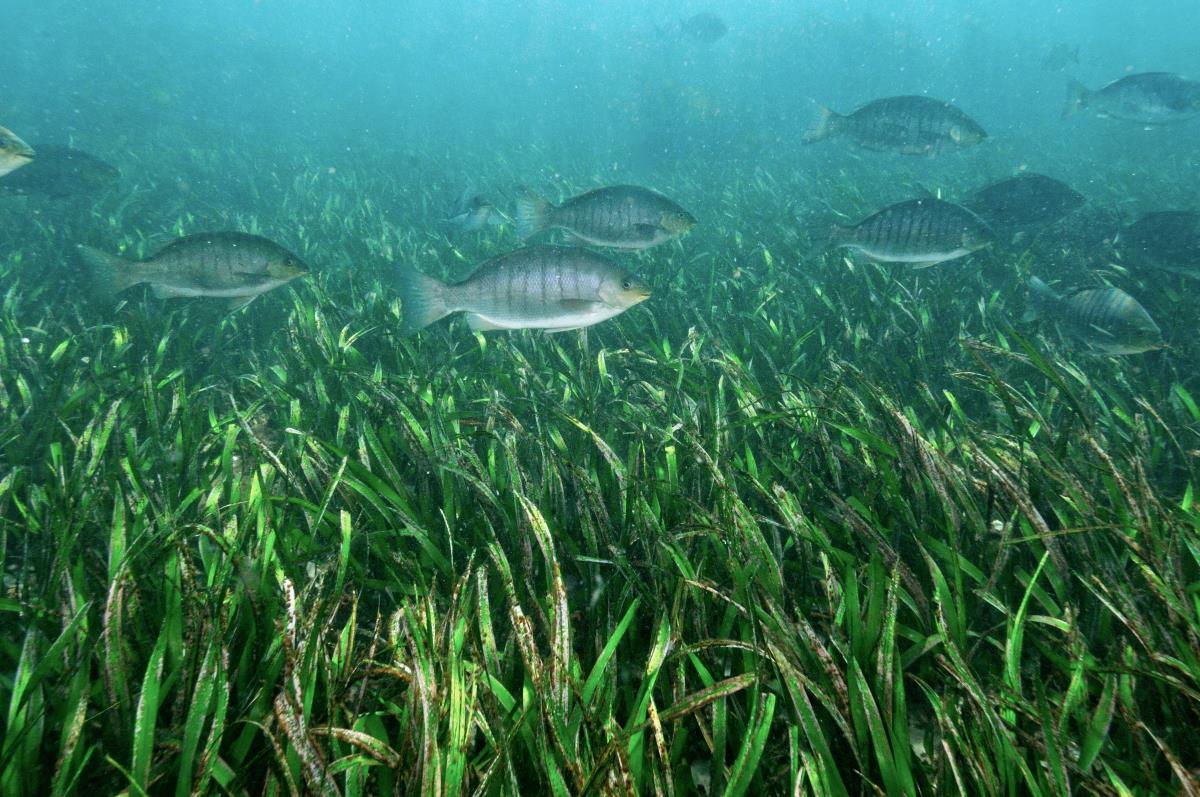
Estuaries and the key fish habitats within them such as seagrass, mangroves and saltmarsh are important ecosystems, and home to a wide variety of marine life.
Estuaries are especially important to many recreationally and commercially targeted species as they provide nurseries rich in food and shelter for juvenile fish.
NSW estuaries and their habitats are under increasing threat from a range of stressors including pollution, extreme weather events, and poorly designed coastal infrastructure and a range of on water human uses.
What are we doing?
Monitoring fishes and their habitats in estuaries builds on our scientific knowledge of these systems and can help inform improved management of these systems.
This project will help to understand the influence of marine infrastructure, stormwater drains and natural habitats on estuarine fishes.
This information will help guide management decisions that minimise the impacts of human activities while maximising the benefits provided by the marine estate.
We are surveying estuarine fishes along the NSW coastline to assess the possible influence of human activities on estuarine fishes and important habitats.
This study will help to develop guidelines for the future management of marine infrastructure in estuaries, fish habitat and their fish assemblages.
Find out more about the importance of estuaries in NSW by going to the DPIRD Fisheries estuary webpage.
What have we achieved so far?
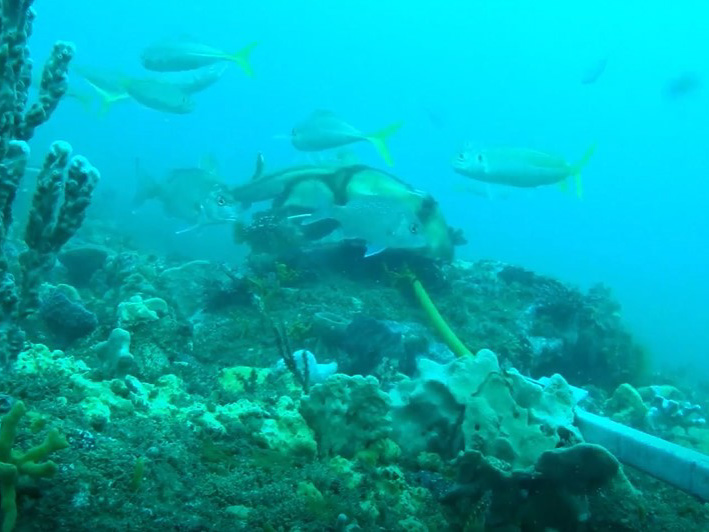
- Deployed over 70 baited remote underwater videos in Pittwater to survey estuarine fishes.
- Completed more than 40 baited remote underwater videos have been deployed in south coast estuaries to survey fishes and monitor ‘red spot’ disease.
- Contributed data to a collaborative report on the science of Gamay (Botany Bay) led by the Sydney Institute of Marine Science
- Progressed fieldwork for an ARC funded project, which assesses the impact of artificial structures and natural habitats on fish assemblages in Gamay (Botany Bay).
- Collected 207 baited remote underwater video surveys (131 Jervis Bay and 76 Gamay) which now brings the total to 669 videos for the project, of which approximately 150 have been processed.
- Supported UNSW partners undertaking beach seine sampling of larval and juvenile fishes to evaluate the shallow sandy beach habitat as a nursery ground for coastal fishes in Gamay and Jervis Bay. This method will also be used to assess the effects of foreshore modifications on recently recruited fishes.
- Co-authored report was produced on the impacts of drought, bushfires and flooding on estuarine fish assemblages using eDNA.
Another winter round of baited remote underwater video (BRUV) sampling was completed in Gamay (Botany Bay) as part of our ARC Linkage project with the University of Sydney and University of New South Wales.
This project is assessing how key threats affect estuarine fish. Sampling during the reporting period covered approximately 75 sites. Across the project, we’ve now completed 290 BRUV deployments in Jervis Bay and 430 in Gamay, with roughly half annotated for fish.
We carried out another round of estuarine electrofishing at Everlasting Swamp and Sportsmans Creek earlier in the financial year. These data are being used to assess the condition of local fish assemblages ahead of potential wetland restoration. This survey followed major flooding from Cyclone Alfred and will provide data on the impacts of flooding and low water quality to fishes.
For more information about our achievements in Marine Estate Management Strategy, please visit our report page.
Locations
Greater Sydney region
Lead agency
Department of Primary Industries and Regional Development
More information
Our Initiatives
Contacts
Project updates
Fish on screen
14 March 2022
The ecology of Botany Bay (Gamay) revealed
14 August 2023
Study shows what stresses seagrass (and the fish that love it)
21 November 2023
Effects of extreme floods on offshore fish
18 August 2025