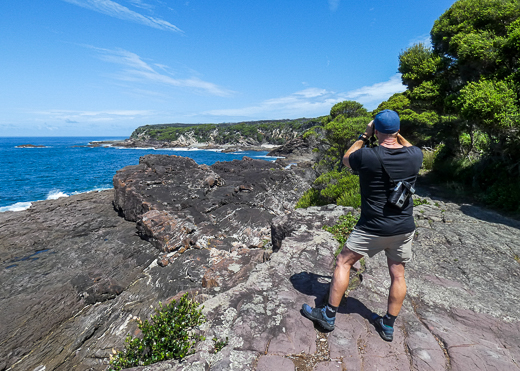
Supporting marine and coastal adaptation
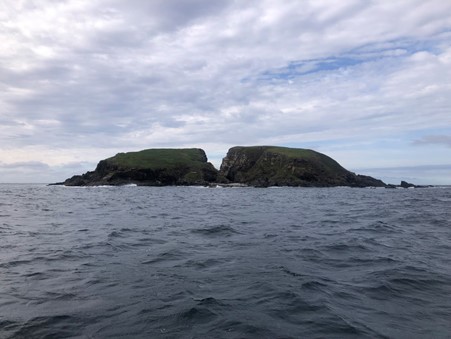 Climate change risks to Split Solitary Island, and the broader Solitary Islands Marine Park are being assessed to inform on-ground adaptation actions. Photo: Coral Latella
Overview
This project has been renamed from Climate change adaption to Supporting marine and coastal adaptation. This is to better reflect the next stage of implementation.
Why this project is important?
Climate change is already affecting the NSW marine estate, including marine parks and coastal environments.
This project builds knowledge and tools to help marine and coastal managers, Traditional Owners, industry and community groups understand and respond to these impacts.
It supports the NSW Climate Change Adaptation Strategy and aligns with the Marine Estate Management Strategy, ensuring actions are coordinated and evidence based.
By consolidating and sharing information, the project strengthens resilience and helps safeguard biodiversity, cultural values and community benefits from the marine estate.
What are we doing?
We are synthesising preliminary work for Solitary Islands Marine Park to make information accessible to stakeholders. We are also identifying climate change risks and possible resilience and adaptation actions across NSW marine protected areas.
Key deliverables for 2024–2026
- Incorporating marine estate data into the statewide Climate Change Risk and Opportunity Assessment.
- Developing marine estate content for inclusion on the AdaptNSW website.
- Preparing climate change risk assessments and adaptation toolkits for Cape Byron, Solitary Islands, Port Stephens – Great Lakes, Lord Howe Island, Jervis Bay and Batemans marine parks.
- Developing resilience and adaptation objectives for NSW marine protected areas.
- Publishing Changing Oceans: Science and Synthesis – a report on current and future ocean conditions in the NSW marine estate.
- Implementing adaptation actions on Worimi Conservation Lands, including dune stabilisation and coastal habitat restoration.
What have we achieved so far?
Between 2022–2024, we delivered preliminary work to identify gaps in regional climate change information and resources for marine and coastal managers.
We identified climate change risks and adaptation tools for Cape Byron, Solitary Islands, Jervis Bay and Batemans Marine Parks and established a foundation for integrating climate change risks and adaptation tools into ongoing monitoring and management of NSW marine protected areas.
We strengthened collaboration between government agencies, Traditional Owners, industry and community groups.
In 2026, we published Changing Oceans: Science and Synthesis report. This report provides a New South Wales–level assessment of how climate change is altering the marine estate, complementing recent global syntheses such as the IPCC Sixth Assessment Report (AR6, 2023).
It examines changes observed over recent decades across key abiotic variables, including ocean temperature, salinity, circulation, acidification, biogeochemistry, estuarine impacts and sea level rise.
The Science and Synthesis Report has now been finalised, bringing together the latest research on the physical impacts of climate change across the NSW marine estate. This work provides a clear evidence base to guide our decision-making and support future climate change adaptation planning.
Draft climate risk assessments and adaptation toolkits have been prepared for the Lord Howe Island and Port Stephens–Great Lakes Marine Parks. These documents outline the key climate risks to the environmental, social, cultural and economic values of each park, and present example actions that can help us respond to those risks.
To refine this work, we held 4 workshops with stakeholders, including the Lord Howe Island Marine Park Advisory Committee and representatives from NSW and local government, conservation groups, industry and research organisations through established Technical Working Groups. Engagement with Traditional Owners is planned for early 2026 to ensure cultural perspectives are embedded in the final products.
Informing the Supporting marine and coastal adaptation is one of several projects funded under the Marine Estate Management Strategy to understand, adapt and increase resilience to help mitigate the impacts of climate change on the NSW marine estate.
Other related projects funded under MEMS include:
- Climate change citizen science
- Climate change monitoring
- Climate change research
- Climate change threats to mangrove and saltmarsh
To learn more about achievements delivered through the Marine Estate Management Strategy, please visit our marine estate reporting progress page.
Locations
Statewide
Local government areas - Statewide
Lead agency
Department of Climate Change, Energy, the Environment and Water – Strategic Policy, Science and Engagement (DCCEEW SPE)
Partners
- NSW Department of Climate Change, Energy, the Environment and Water (NSW DCCEEW)
- Department of Primary Industries and Regional Development
- BMT Global (external)
More information
Our Initiatives
Contacts
Project updates
Deep dive on health of NSW coast
18 December 2019
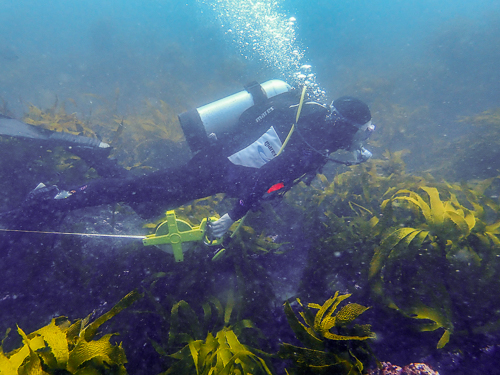
Researchers find climate change indicators
14 May 2020
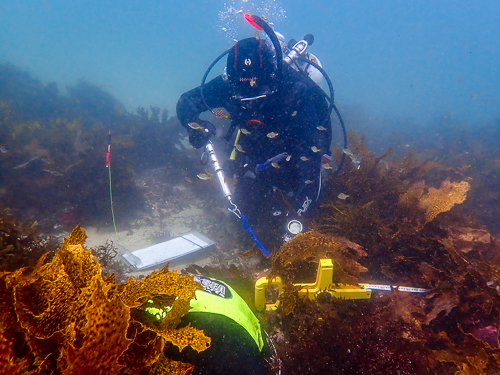
Keen eyes spot Bull Kelp on the NSW south coast
8 March 2022